
A Victorian Lion, Revisited in 3D on London’s Newest Embankment.
Using a short handheld capture session, I created a 3D model of one of the restored Victorian lion mooring rings on London’s new Bazalgette Embankment.
The new Bazalgette Embankment at Blackfriars is London’s first new embankment in 150 years.
It forms part of Tideway’s Thames super sewer megaproject and was designed by Hawkins\Brown. The new spaces were created for civil engineering reasons, but this infrastructure is now largely hidden below the public realm.
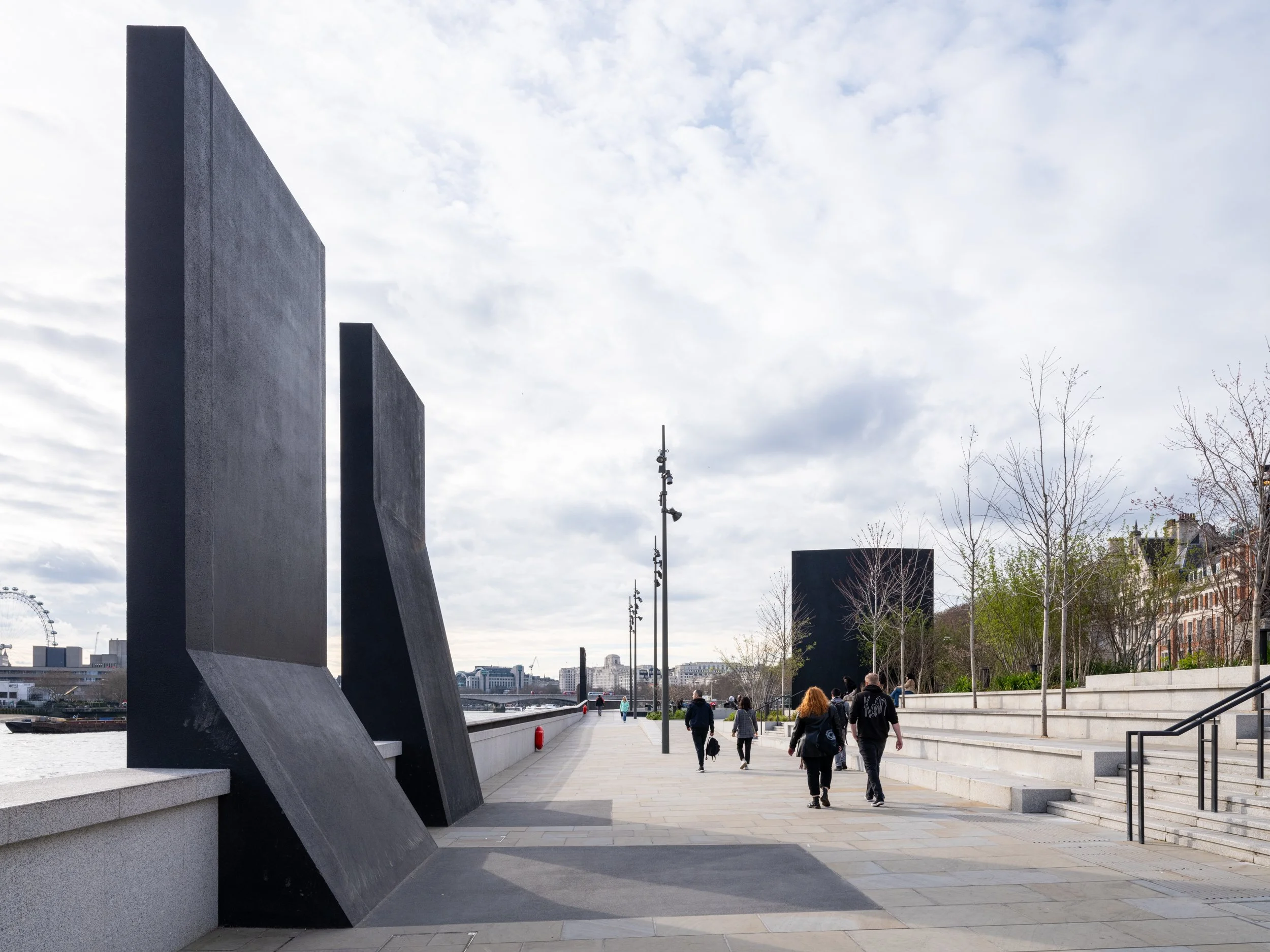
Monoliths, street furniture and various other sculpture are present on the embankment.
Set into its original perimeter walls are restored and relocated bronze lion mooring rings, Victorian sculptures by Timothy Butler, made in 1868 for Sir Joseph Bazalgette’s embankment works.
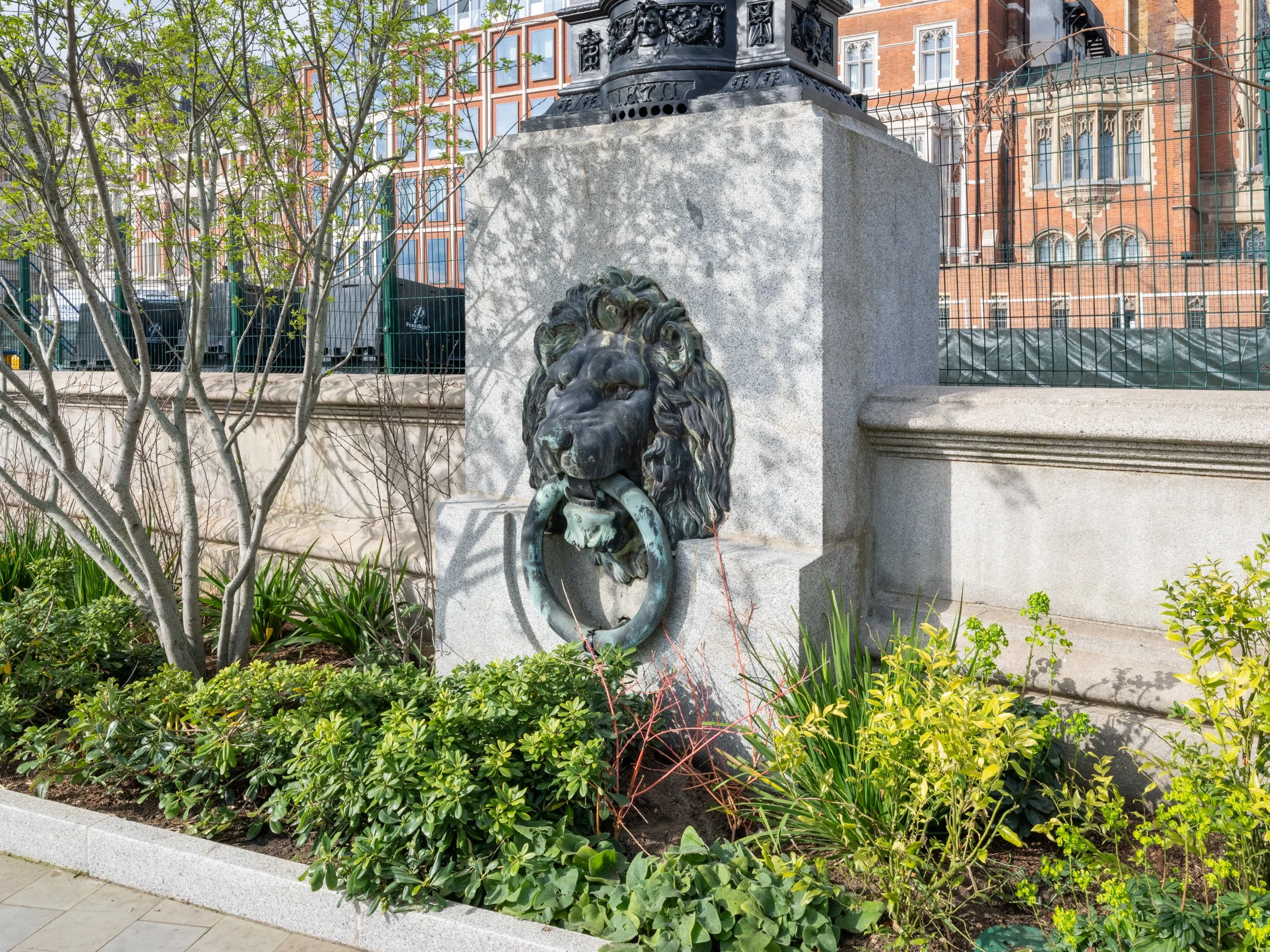
The original mooring rings alongside new planting.
A Victorian detail brought closer
These lions were part of the ornamental scheme for the original embankment wall, each holding a bronze mooring ring in its jaws. Whether the rings were ever regularly used for mooring is debatable. Some accounts suggest they were primarily decorative.
Their siblings still line the Victoria Embankment near Cleopatra’s Needle, though they are usually only visible from above. There is an old saying: “When the lions drink, London will sink.”
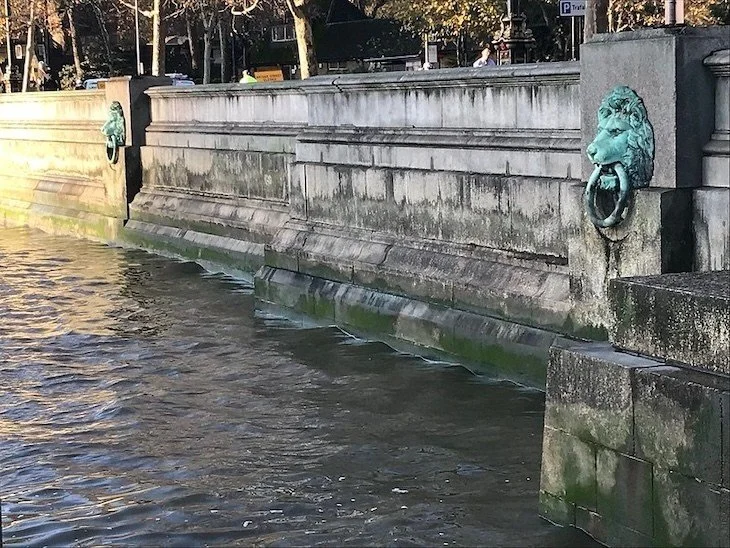
The original embankment. Image: Matt Brown, Londonist.
The reason you can now get so close is that the new embankment is built on reclaimed land, extending out beyond the original river wall. Where you stand to look at the lions was the river Thames until recently. The old wall is now set back from the river edge, which puts the relocated sculptures at eye level and within arm’s reach, rather than forcing you to peer down at them from the road above.
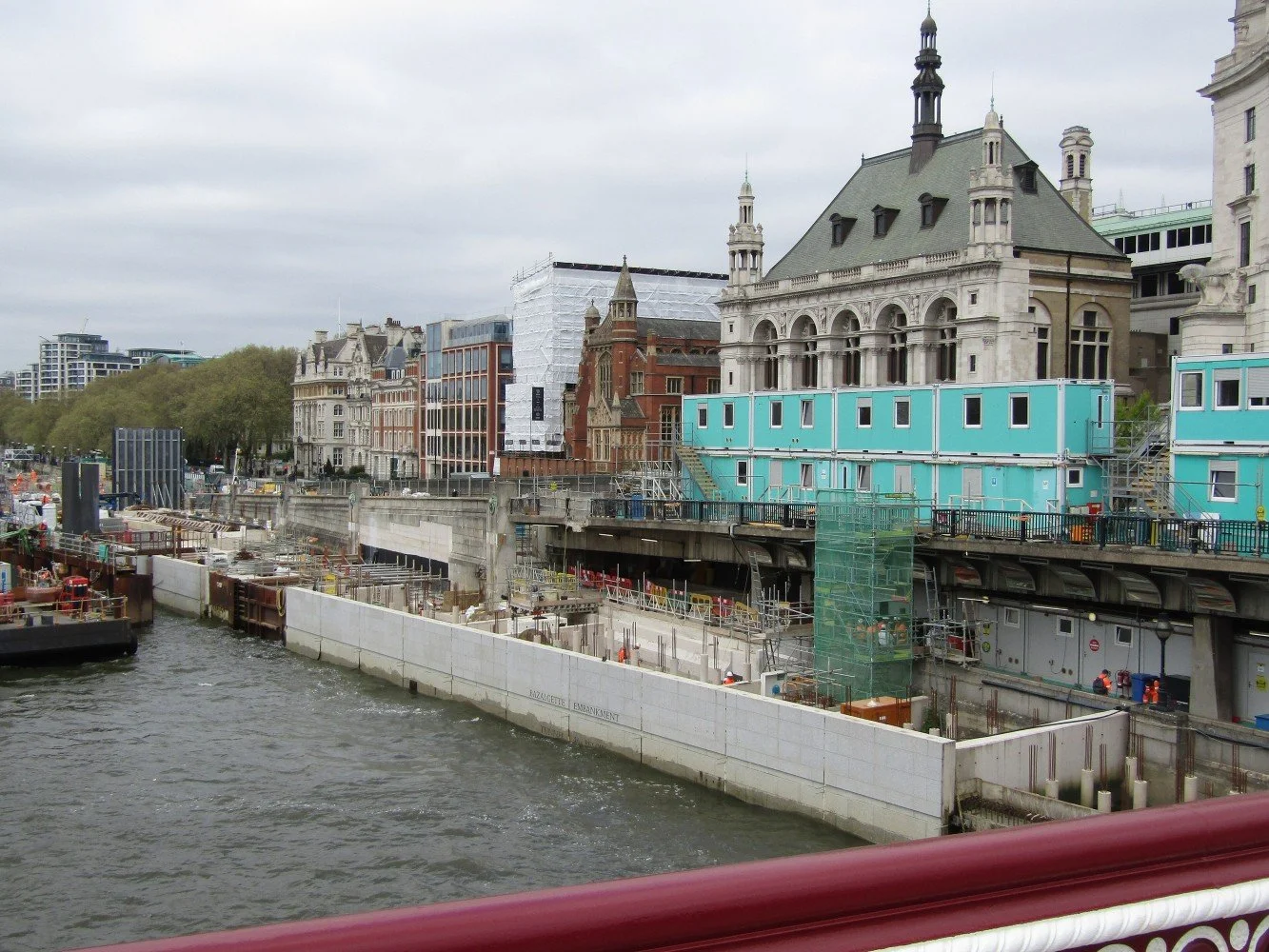
Progress in 2023. Image: Colin Smith, Geograph
Some final works on the embankment are still to be completed, but the lions are already accessible and the space is open to the public.
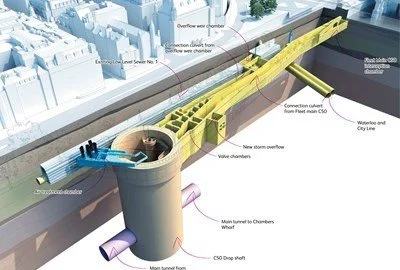
The infrastructure below the public realm. Image: Tideway
Capturing the lion in 3D
I captured one of the lions using around 350 photographs taken handheld with a normal medium format digital camera, working around it from every accessible angle in about 15 minutes.
Those photographs were then processed into a Mesh model, which you can explore below.
The model lets you orbit the lion freely, examining the detail, the patina of the metal, the mooring ring, and the texture of the surrounding stonework.
It is worth spending a moment looking at the quality of Butler’s original sculpting. The mane detailing and the expression are remarkably well preserved after more than 150 years.
Hopefully, the back zip ties in the ring are not intended to be permanent and will be removed.
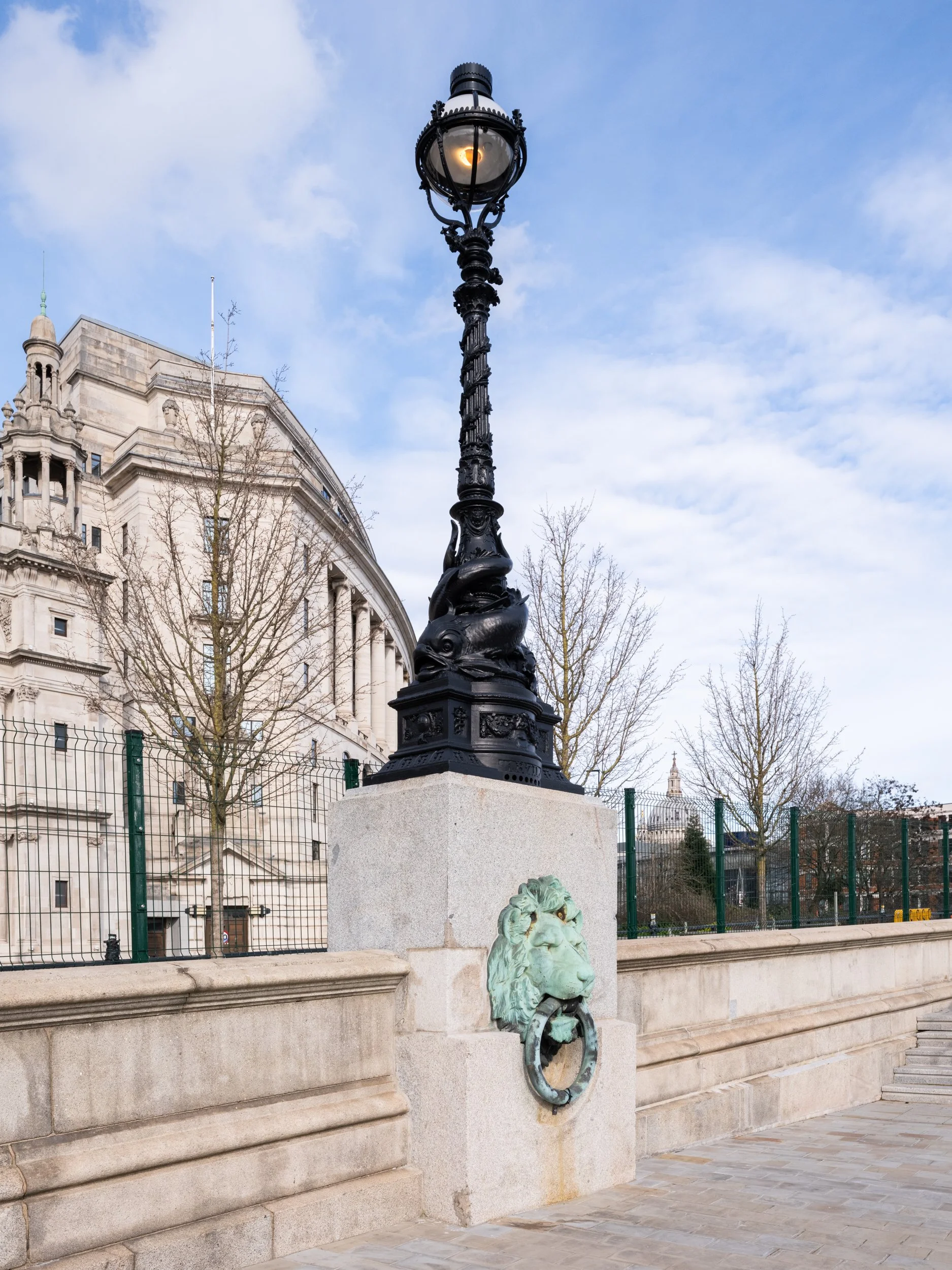
Mooring rings with streetlamps
What you are looking at
The same set of 350 photographs can produce two different types of 3D model, each useful for different purposes.
This model is a photogrammetry mesh, which builds precise 3D geometry from the photographs, creating hi resolution and accurate, measurable surfaces. For heritage documentation, this is valuable for condition recording, dimensional reference, and integration with other survey data.
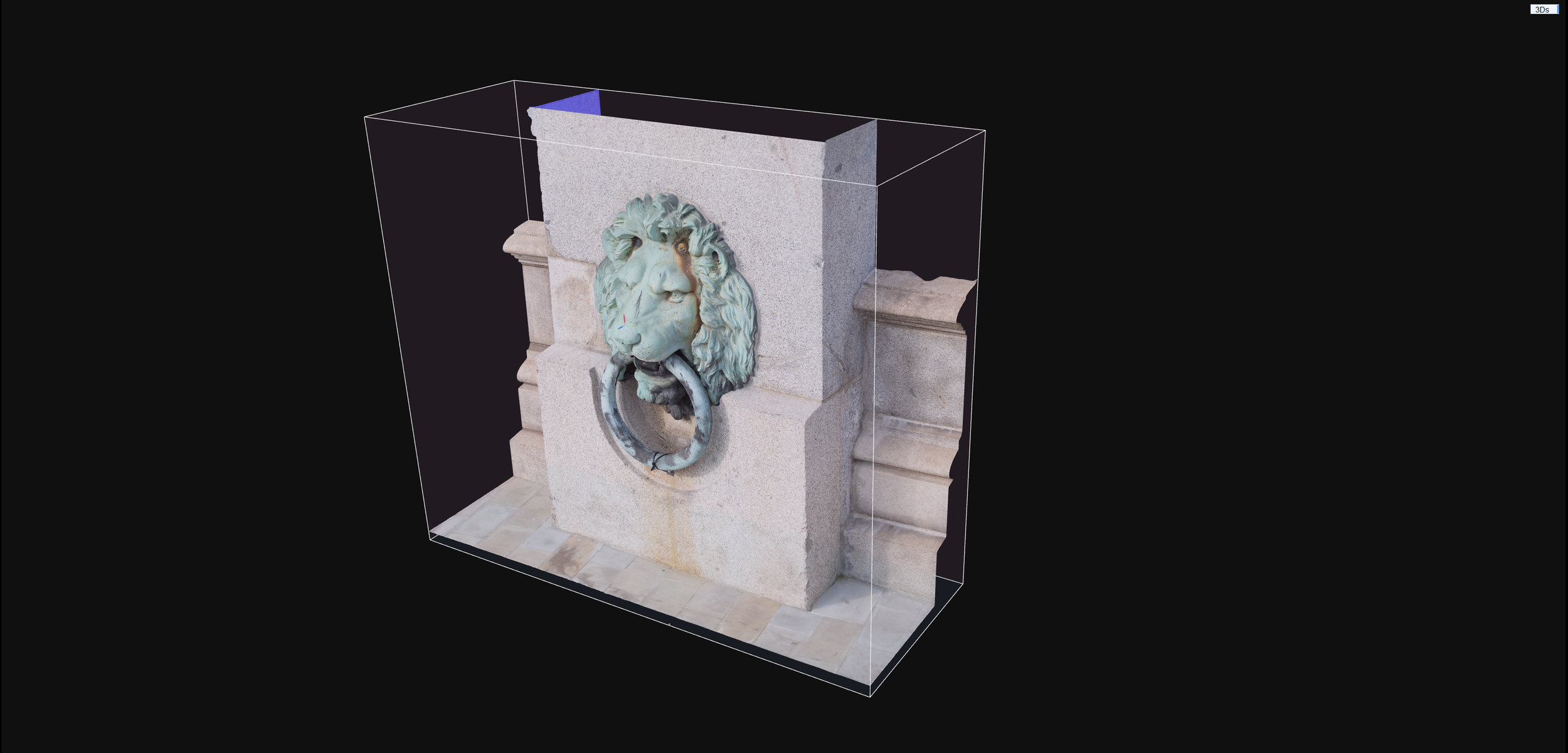
3D Mesh model
The same photographs can also produce a Gaussian splat model, built from millions of tiny blobs that reproduce how light and colour behave across the subject. That approach retains full photographic quality: tones, texture, and subtle colour shifts preserved as they appeared on the day. Splat models generally need images from a wider range of angles to render surfaces correctly, and in this case access behind the wall was limited by ongoing works.
Both models come from a single capture session. The choice of which to use depends on the task: geometric precision and measurement, or photographic fidelity and presentation. Often, both are useful and can be used together.
From 350 photographs to interactive model
This was an ad hoc visit. The light was decent and the subject was worth stopping for.
It is a useful demonstration of what a short handheld capture session can produce from 15 minutes of photography. The same approach scales to full building exteriors, construction sites, large heritage structures, and interior spaces.
If you work with heritage assets, building documentation, or any project where the physical character of a structure matters, this is worth exploring.
The same capture method also works well for smaller individual architectural elements that deserve closer attention: gargoyles, carved stonework, decorative ironwork, memorial plaques, and monuments.
A 3D record does not replace physical conservation efforts, but it does give multiple teams and the public a way to review detail remotely. It can also help inform decisions about where hands-on access is actually needed before work begins.
Explore the interactive model
The model is fully interactive, so have a look and see what you think.
View the model here - https://buildingreality.nira.app/a/VyjIVAeoQRuHJ-Ia6L-UOg/1
Like what you see?
Subscribe to this newsletter on LinkedIn for updates and similar posts on Architecture, 3D & Photography on LinkedIn https://www.linkedin.com/build-relation/newsletter-follow?entityUrn=7407083189870940160
